Inventory - stock and warehouses
The Inventory module tracks items (goods, raw materials, consumables, finished products) across warehouses and all stock movements. As everywhere in the app, inventory documents automatically generate the accounting notes via the inventory Centralizer.
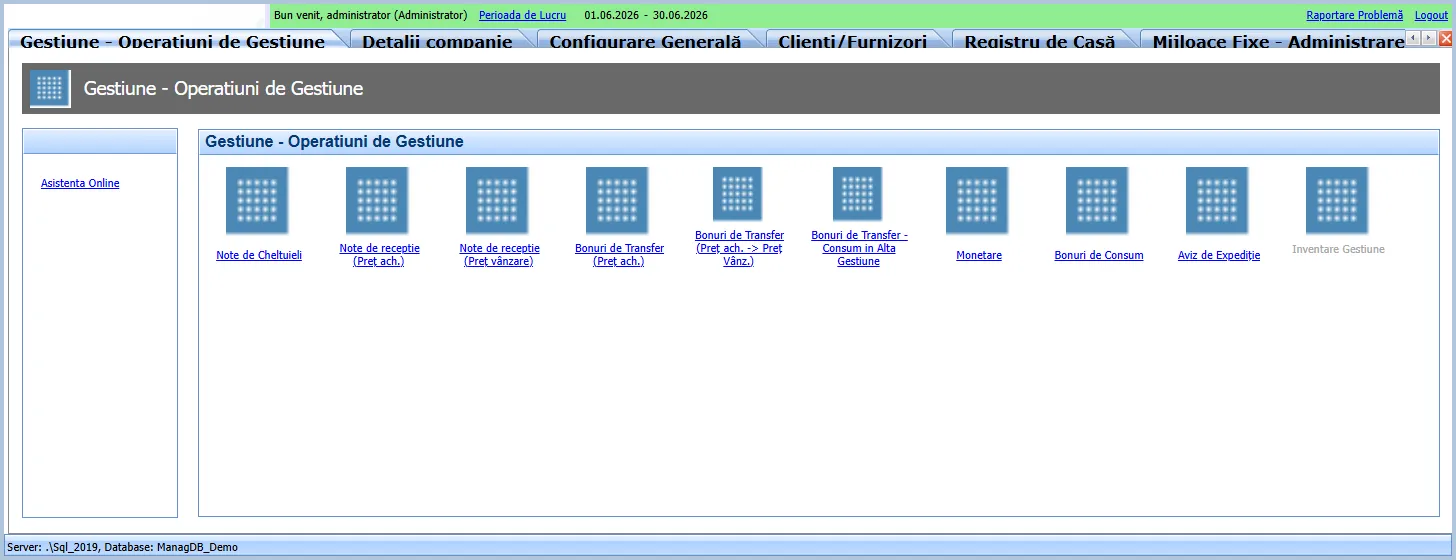
Core concepts
Section titled “Core concepts”- Item (product/service): what you sell, buy or consume. Has a VAT rate and, for products, a stock category (class 3xx: goods 371, raw materials 301, consumables 302…).
- Warehouse: where the stock is held. A company can have several.
- Stock movement: any inflow or outflow. Common types:
- Reception - inflow of goods (from a supplier).
- Delivery / dispatch note - outflow to a customer.
- Transfer - move between warehouses.
- Consumption note - outflow into production/internal use.
- Stock-taking - reconciling physical vs book stock.
The typical flow
Section titled “The typical flow”- You record a reception: stock increases, acquisition value is captured.
- On a sale, a delivery decreases stock; the sales invoice links to the goods that left.
- Periodically you run the inventory Centralizer, which generates the accounting notes for the period’s inflows/outflows (e.g. cost of goods sold: 607 from 371 on a goods sale).
- When needed, stock-taking corrects discrepancies.
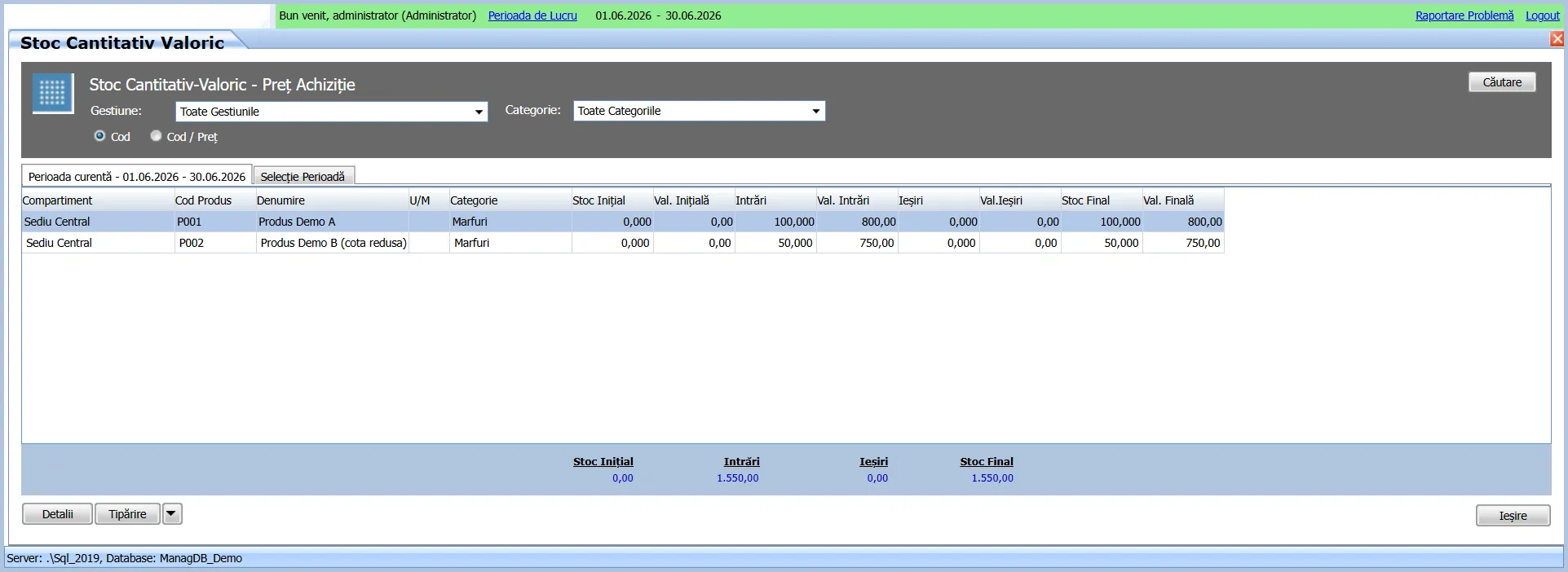
Note (current version): a reception starts from a purchase invoice - reception lines are pulled from an unprocessed received invoice, not entered from scratch. A manual reception without an invoice (goods arriving before the invoice, opening stock via reception) is noted as a new-platform requirement (see the rewrite gap register, B4/B5).
What the accountant sees
Section titled “What the accountant sees”- Inventory notes appear in the journal as auto-generated, source “Inventory”.
- Stock value and cost of goods sold show in class 3 (stock) and class 6 (cost of goods/materials).
Links with other modules
Section titled “Links with other modules”- A reception links to a supplier (Partners) and, if it comes with an invoice, to the Purchases module.
- A delivery links to a customer and to the sales invoice.
- Movements feed the Centralizer (Accounting) and update the stock reports.
Note: the current version has V1 and V2 document types for some operations (reception, transfer), kept for historical-data compatibility. The new platform keeps a single variant.