Financial - cash, bank, treasury
The Financial module manages the company’s money: cash operations (notes & coins), bank (transfers, statements), treasury advances and set-offs between partners. Each type has its own centralizer that generates the accounting note.
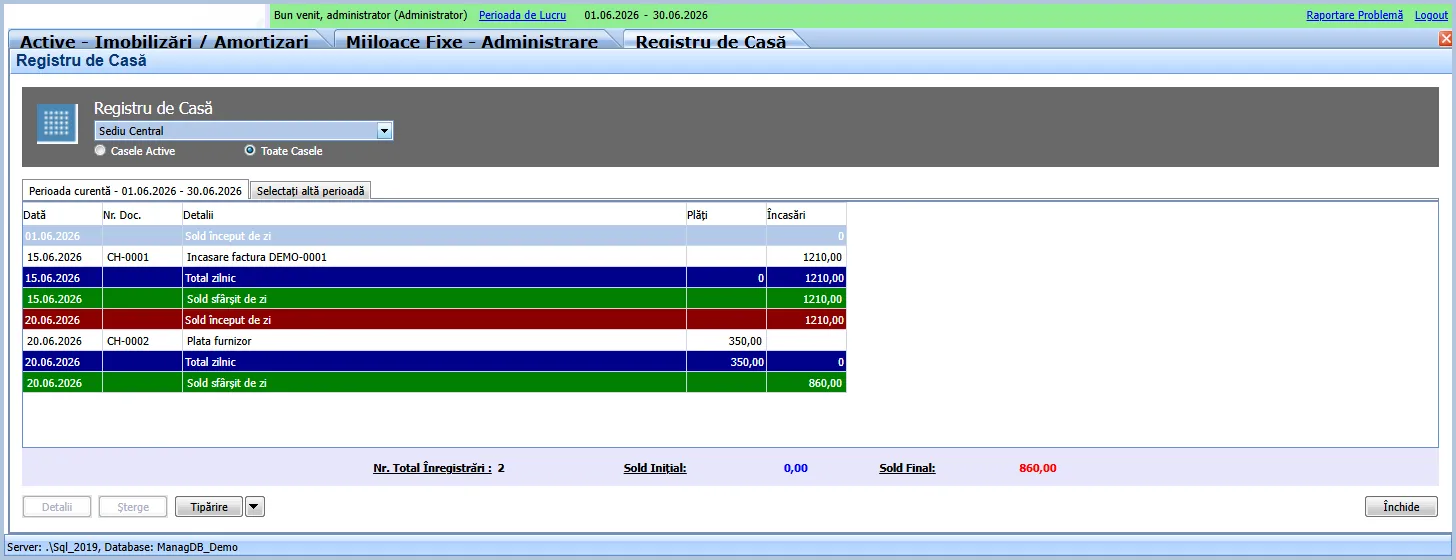
- Receipts and payments in cash, across one or more cash desks.
- Collecting a customer invoice reduces the customer balance; paying a supplier invoice reduces the supplier balance.
- The cash centralizer generates the notes (e.g. 5311 Cash from 4111 Customers on a receipt).
- Bank operations: receipts, payments, transfers, fees, interest.
- Bank accounts each have their accounting symbol (512x).
- The bank centralizer produces the matching notes; fees go to bank charges (627), interest received to revenue (766).
Treasury advances
Section titled “Treasury advances”- Amounts given to employees for expenses (settlements). Tracked per person and justified with documents.
Set-offs
Section titled “Set-offs”- Mutual extinction of debts/receivables with the same partner company (customer and supplier at the same time), with no movement of money.
What the accountant sees
Section titled “What the accountant sees”- All financial operations centralize into notes (source Cash/Bank/Treasury/Set-offs).
- Treasury balances (class 5) and the link to partners (class 4) show in the ledgers.
- Receipts/payments link to invoices (Partners / Sales-Purchases) and update overdue items.
- Changing the work period refreshes the financial ledgers.